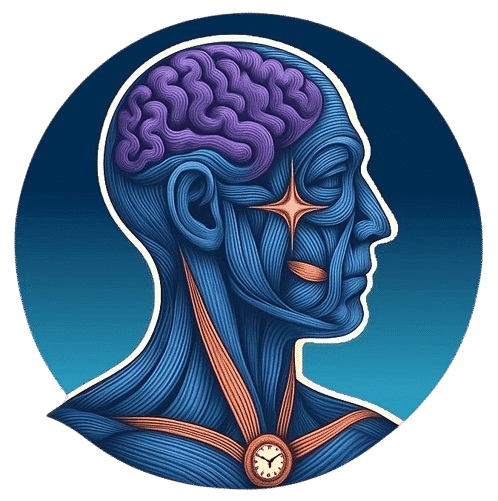


If you’ve ever felt your chest tighten when you smell a certain cologne, or found yourself frozen in a moment that reminds you of something painful—even when you can’t consciously remember why—you’re not imagining it. Your body is remembering something your mind may have tried to forget.
This phenomenon, known as somatic memory, is a key factor in understanding why trauma often feels less like a thought and more like a physical sensation that can take over without warning. Recognizing somatic memory and trauma can help you navigate these responses with clarity and self-compassion. For guidance on healing from past trauma, exploring somatic memory is an essential step toward recovery.
What Is Somatic Memory?
Somatic memory refers to how traumatic experiences are stored in the body’s nervous system, muscles, and sensory pathways rather than solely as narrative memories in the brain. Unlike explicit memories you can consciously recall and describe, somatic memories are encoded as physical sensations, movement patterns, and autonomic nervous system responses.
When triggered, these body-based memories can recreate the physical and emotional states you experienced during the original trauma—often without conscious awareness of what’s happening or why. Understanding somatic memory and trauma helps explain why your body can feel “stuck” in a past experience even when your mind knows you are safe.
What Somatic Memory Feels Like
People experiencing somatic memory often describe it as confusing because the body reacts before the mind understands.
- You might notice your heart racing when someone raises their voice, even in a non-threatening context.
- Your stomach might clench when you enter a room that resembles a place where something traumatic occurred.
- You may feel an overwhelming urge to flee during an argument, or find yourself frozen when you need to speak up.
These reactions are not overreactions or signs of weakness. They are your nervous system responding to stored trauma the only way it knows—through the body’s original survival responses.
Many people report feeling disconnected from these reactions, as if their body is acting independently of their rational mind. This disconnect itself can be distressing, creating a sense that you are not in control of your own responses.
Why Trauma Gets Stored in the Body
When you experience trauma, your brain prioritizes survival over memory formation. Areas responsible for language, time sequencing, and conscious memory—particularly the hippocampus and prefrontal cortex—can partially shut down during overwhelming experiences.
Meanwhile, the amygdala and other subcortical structures remain highly active, encoding experiences as threats to survival. This encoding occurs through physical sensations, emotional states, and autonomic nervous system activation rather than narrative memory.
Dr. Bessel van der Kolk’s research demonstrates that trauma fundamentally changes how the brain processes and stores information. Traumatic memories often fail to integrate into your autobiographical memory system and remain fragmented, stored in sensory and motor networks.
Your body essentially creates a shortcut: if a similar sensation or context arises again, it bypasses conscious processing and triggers survival responses immediately. While evolutionarily adaptive for physical threats, this becomes problematic when your nervous system cannot distinguish between past danger and present safety.
Polyvagal theory, developed by Dr. Stephen Porges, further explains this process. Your autonomic nervous system constantly scans for danger through neuroception, a threat-detection mechanism occurring below conscious awareness. When neuroception identifies cues reminiscent of past trauma, defensive responses can activate before you consciously recognize the threat.
Signs Your Body Is Holding Trauma
Somatic trauma symptoms vary widely, but common patterns include:
Physical sensations without clear medical cause:
- Chronic muscle tension, especially in the jaw, shoulders, or hips
- Unexplained pain that moves or changes
- Digestive issues worsening with stress
- Difficulty taking deep breaths or feeling unable to get enough air
Nervous system dysregulation:
- Hypervigilance or feeling constantly “on edge”
- Startle responses that seem disproportionate
- Difficulty sleeping or staying asleep
- Persistent exhaustion despite rest
Body-based reactions in specific situations:
- Freezing when needing to speak or act
- Sudden urges to flee safe environments
- Physical shutdown or emotional numbing
- Involuntary flinching or defensive movements
Disconnection from physical sensations:
- Difficulty identifying bodily feelings
- Numbness or feeling “not quite there”
- Dissociation during physical touch, even when wanted
- Ignoring physical needs like hunger, thirst, or bathroom urgency

How Somatic Memory Affects Mental Health and Daily Life
Living with unprocessed somatic memory creates a persistent sense of unsafety in your nervous system. This chronic activation takes a significant toll:
- Anxiety often arises not from conscious worry but because your body remains braced for danger.
- Depression can emerge when the nervous system is in a collapsed, shutdown state as a strategy to conserve energy against perceived ongoing threats.
- Relationships may suffer when your body interprets intimacy, vulnerability, or positive attention as dangerous, leading to tension, emotional numbing, or withdrawal.
You can learn more about how chronic stress rewires your nervous system for survival, which deepens understanding of why these responses occur.
- Work performance can decline when normal stress is filtered through past trauma, resulting in procrastination, concentration difficulties, or physical symptoms that impair functioning.
- Perhaps most isolating is the sense that your reactions do not make sense even to you. When your body responds to safety as if it were danger, internal confusion and shame about your responses often arise.
At the same time, understanding why trauma survivors feel broken—and why they’re not provides important reassurance for those navigating these experiences.
What Actually Helps: Evidence-Based Approaches
Healing somatic memory and trauma requires approaches that work directly with the body, not just cognition. Talk therapy alone is often insufficient because nervous system responses cannot simply be thought away.
- Somatic Experiencing: Developed by Dr. Peter Levine, this approach helps people discharge trapped survival energy and restore nervous system flexibility.
- Sensorimotor Psychotherapy: Combines cognitive processing with body awareness, gradually shifting physical patterns linked to trauma.
- EMDR (Eye Movement Desensitization and Reprocessing): Reprocesses traumatic memories for integration into normal memory networks, reducing somatic intensity.
- Yoga and mindful movement: Rebuild mind-body connection and teach the nervous system that movement can be safe; trauma-informed yoga is specifically adapted to avoid triggering responses.
- Breathwork and vagal toning: Practices like extended exhale breathing or humming shift the nervous system from sympathetic (fight-flight) to parasympathetic (rest-digest) dominance.
- Safety cues: Predictable routines, sensory anchors (scents, textures, sounds), and trauma-informed spaces retrain neuroception.
The guiding principle across these methods is titration—working with trauma in small, manageable doses to gradually regulate the nervous system rather than forcing rapid change.
Resources and Tools That Can Support This Work
- Professional support frameworks: Seek therapists trained in Somatic Experiencing, Sensorimotor Psychotherapy, EMDR, or other body-based trauma modalities.
- Body awareness practices: Trauma-informed yoga, body scan meditations, and grounding exercises can help rebuild mind-body connection without judgment.
- Nervous system regulation tools: Track hyperarousal, hypoarousal, or regulated states to respond effectively to bodily needs.
- Educational resources: Learning about trauma neuroscience reduces shame and fosters self-compassion.
- Supportive environments: Support groups, online communities, or trauma-informed spaces reduce isolation.
Moving Forward: Your Body’s Wisdom
Your body’s memory of trauma, while sometimes overwhelming, is evidence of its profound wisdom. Every physical response began as your nervous system’s attempt to protect you.
Healing does not mean erasing these responses. It means teaching your nervous system that what was once dangerous is now past and that safety is possible in the present.
This work requires time, patience, and often professional guidance. With the right approaches, it is possible to shift from being controlled by somatic memory to having a body that feels like home—a place where you are present, connected, and alive. For understanding the broader context of these reactions and their impact on mental health, consider exploring psychological damage after abuse.
You are not broken. Your body is doing exactly what bodies do when surviving overwhelming experiences. With understanding and support, it can learn a new, safer way forward.
References
American Psychological Association. (2017). Clinical practice guideline for the treatment of posttraumatic stress disorder (PTSD) in adults. https://www.apa.org/ptsd-guideline
Levine, P. A. (2010). In an unspoken voice: How the body releases trauma and restores goodness. North Atlantic Books.
Ogden, P., Minton, K., & Pain, C. (2006). Trauma and the body: A sensorimotor approach to psychotherapy. W.W. Norton & Company.
Payne, P., Levine, P. A., & Crane-Godreau, M. A. (2015). Somatic experiencing: Using interoception and proprioception as core elements of trauma therapy. Frontiers in Psychology, 6, 93. https://doi.org/10.3389/fpsyg.2015.00093
Porges, S. W. (2011). The polyvagal theory: Neurophysiological foundations of emotions, attachment, communication, and self-regulation. W.W. Norton & Company.
Shapiro, F. (2018). Eye movement desensitization and reprocessing (EMDR) therapy: Basic principles, protocols, and procedures (3rd ed.). Guilford Press.
van der Kolk, B. A. (2014). The body keeps the score: Brain, mind, and body in the healing of trauma. Viking.
van der Kolk, B. A., Stone, L., West, J., Rhodes, A., Emerson, D., Suvak, M., & Spinazzola, J. (2014). Yoga as an adjunctive treatment for posttraumatic stress disorder: A randomized controlled trial. Journal of Clinical Psychiatry, 75(6), e559-e565. https://doi.org/10.4088/JCP.13m08561
World Health Organization. (2013). Guidelines for the management of conditions specifically related to stress. WHO Press.
