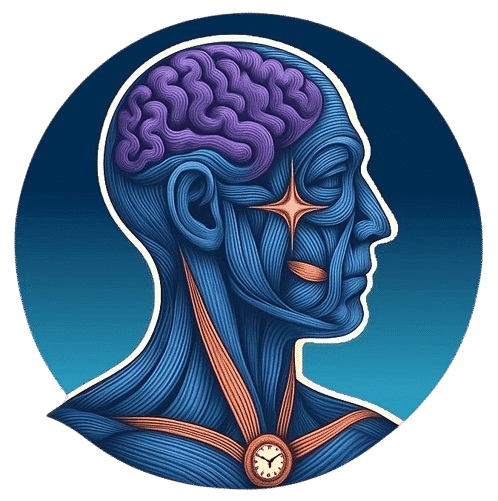


If you’re reading this, there’s a good chance your mind won’t stop replaying conversations, analyzing what went wrong, or questioning whether you’re the problem. Overthinking after narcissistic abuse is not a character flaw—it is a psychological survival response. Your brain is trying to make sense of something that was designed to be confusing.
You’re not broken. You’re healing from a relationship that deliberately destabilized your sense of reality. This pattern is a well-documented form of psychological damage after abuse, not a personal failure.
What Is Post-Abuse Overthinking?
Post-abuse overthinking refers to a persistent pattern of repetitive, intrusive thoughts that emerges after experiencing psychological manipulation, particularly in relationships involving narcissistic abuse. This pattern is commonly characterized by rumination about past events, heightened sensitivity to social cues, and compulsive mental review of conversations or interactions.
Unlike typical worry, post-abuse overthinking is rooted in trauma. Your nervous system learned that missing a detail could result in blame, criticism, or emotional punishment. As a result, even though the relationship has ended, your brain may continue scanning for threats that are no longer present.
What Overthinking After Narcissistic Abuse Feels Like
Overthinking after narcissistic abuse is often described as mental exhaustion without rest. Survivors frequently report experiences such as:
- Lie awake replaying arguments word-for-word, trying to figure out where things went wrong.
- Reread old text messages searching for evidence of manipulation that may have been missed.
- Question personal memories, wondering whether events truly happened as remembered.
- Feel paralyzed by small decisions due to a loss of trust in personal judgment.
- Analyze new relationships obsessively, searching for potential red flags.
- Experience physical tension—such as a tight chest, jaw clenching, or difficulty breathing—while thoughts spiral.
Many survivors describe this state as having dozens of browser tabs open in the mind, all running simultaneously. These mental loops drain energy without providing resolution.
Why Your Brain Won’t Stop After Narcissistic Abuse
Narcissistic abuse creates specific psychological conditions that directly fuel overthinking. Understanding these mechanisms helps clarify why this response is normal rather than pathological.
- Cognitive dissonance: You experienced a fundamental mismatch between the person’s words and actions. Your brain may still be attempting to resolve this incompatibility, replaying events in search of coherence that does not exist.
- Gaslighting aftereffects: When someone repeatedly denied your reality, you learned to doubt your perceptions. Overthinking can become an attempt to verify what actually happened and to restore a sense of truth. This often occurs alongside harsh inner criticism that mirrors the abuse and connects closely to patterns explored in How to Stop Negative Self-Talk After Abuse and Reclaim Your Confidence.
- Intermittent reinforcement: The unpredictable pattern of affection followed by cruelty created a psychological reward loop. Your brain may continue analyzing the relationship in search of a formula that could have prevented the abuse, even though no such formula exists.
- Hypervigilance: Your nervous system adapted to an environment where predicting another person’s mood was necessary for emotional safety. This survival response does not automatically switch off once the threat has been removed.
- Trauma bonding residue: The intense emotional connection formed through cycles of abuse and reconciliation can create persistent attachment thoughts, even when you intellectually understand that the relationship was harmful.
Research on complex trauma demonstrates that survivors of prolonged psychological manipulation often develop symptoms similar to PTSD, including intrusive thoughts and rumination. Overthinking after narcissistic abuse reflects a trauma response, not a personal thinking failure.
Signs Your Overthinking Is Trauma-Related
Not all rumination is trauma-based, but certain patterns strongly suggest that overthinking is connected to abuse:
- Mental time travel involving hours spent reviewing past conversations in search of proof.
- Catastrophic predictions about new relationships, leading to analysis paralysis.
- Self-blame loops that assign responsibility for another person’s abusive behavior.
- Decision paralysis stemming from repeated invalidation of perception and judgment.
- Comparison obsession involving the abuser, new partners, or oneself.
- Memory checking that seeks external confirmation due to self-doubt.
- Physical symptoms such as headaches, insomnia, digestive distress, or muscle tension.
- Social withdrawal to avoid the mental effort of analyzing interactions.

How Overthinking Affects Your Mental Health and Daily Life
The cognitive burden created by persistent rumination has measurable effects on overall wellbeing. Survivors commonly report:
- Sleep disruption as thoughts intensify during quiet nighttime hours.
- Difficulty concentrating because mental energy is consumed by rumination.
- Emotional dysregulation, including anxiety, depression, or emotional numbness.
- Avoidance of relationships due to fear of repeating abusive patterns, a dynamic further explored in Can You Love Again After Trauma? A Step-by-Step Guide.
- Physical health decline linked to chronic stress responses.
- Identity confusion when attention remains anchored to the past relationship.
Research on post-traumatic rumination indicates that unaddressed overthinking can extend recovery time and increase the risk of chronic anxiety or depression. Importantly, this pattern is treatable, and the brain retains the ability to form new neural pathways.
What Actually Helps Stop the Overthinking Cycle
Recovery from overthinking after narcissistic abuse requires both nervous system regulation and cognitive restructuring. Trauma research supports several effective approaches:
- Externalize the thoughts by writing them down without censorship, transforming internal loops into observable material.
- Designate specific worry time to establish boundaries around rumination.
- Use somatic grounding techniques to interrupt trauma-driven thought spirals.
- Challenge investigative thinking by asking whether repeated analysis provides real protection.
- Practice “both/and” thinking to reduce cognitive dissonance.
- Limit compulsive information consumption that reinforces rumination.
- Develop new neural pathways through intentional alternative thought patterns.
- Engage in absorptive activities that allow rumination circuits to rest.
- Seek trauma-informed therapeutic support such as EMDR or somatic therapies.
Tools That Can Make This Easier
While professional support is valuable, several self-directed tools may support recovery:
- Guided grounding exercises
- Journaling frameworks
- Bilateral stimulation tools
- Trauma-informed mindfulness apps
- Psychoeducation materials
- Body-based practices
- Community support spaces
The goal is not to eliminate all thoughts about the past. The aim is to shift from compulsive rumination toward intentional, healing reflection.
You Can Reclaim Your Mental Space
Overthinking after narcissistic abuse is not permanent. It represents your brain’s attempt to protect you from a threat that no longer exists. With time, support, and appropriate resources, the intensity of intrusive thoughts can gradually decrease.
Healing is not linear. Some days may pass without revisiting the past, while others may pull you back into old patterns. Both experiences are normal aspects of recovery. For those ready to explore next steps, additional guidance and structured resources are available within the broader trauma recovery process.
Your mind deserves rest. Your nervous system deserves safety. And you deserve a future that is not defined by what harmed you.
References
American Psychological Association. (2020). Trauma and shock. Clinical Practice Guideline for the Treatment of Posttraumatic Stress Disorder. https://www.apa.org/ptsd-guideline
Ehlers, A., & Clark, D. M. (2000). A cognitive model of posttraumatic stress disorder. Behaviour Research and Therapy, 38(4), 319-345.
Frewen, P. A., & Lanius, R. A. (2015). Healing the traumatized self: Consciousness, neuroscience, treatment. Norton Series on Interpersonal Neurobiology.
Herman, J. L. (2015). Trauma and recovery: The aftermath of violence—from domestic abuse to political terror. Basic Books.
National Institute of Mental Health. (2023). Post-traumatic stress disorder. https://www.nimh.nih.gov/health/topics/post-traumatic-stress-disorder-ptsd
Nolen-Hoeksema, S., Wisco, B. E., & Lyubomirsky, S. (2008). Rethinking rumination. Perspectives on Psychological Science, 3(5), 400-424.
Porges, S. W. (2011). The polyvagal theory: Neurophysiological foundations of emotions, attachment, communication, and self-regulation. W. W. Norton & Company.
van der Kolk, B. A. (2014). The body keeps the score: Brain, mind, and body in the healing of trauma. Penguin Books.
Williams, A. D., & Moulds, M. L. (2007). Cognitive avoidance of intrusive memories: Recall vantage perspective and associations with depression. Behaviour Research and Therapy, 45(6), 1141-1153.
World Health Organization. (2023). International classification of diseases (ICD-11): Complex post-traumatic stress disorder. https://icd.who.int/
