

Supporting Article (W1-S3-A3 · 3 of 7) | Iron-Rich Foods and How to Maximize Absorption
1. What This Article Covers
Iron rich foods provide an essential mineral best known for its role in oxygen transport — specifically, iron is the core component of hemoglobin, the protein in red blood cells that carries oxygen from the lungs to every tissue in the body. Iron deficiency is among the most common nutritional shortfalls worldwide, and a significant part of the reason is that dietary iron is not all the same.
This article focuses on how iron behaves in food and in the gut: the difference between heme and non-heme iron, which foods are the richest sources of each, and what enhances or inhibits iron absorption at the meal level. It does not cover broader gut health and microbiome topics — those belong in a later silo. For how iron fits within the full picture of essential vitamins and minerals, see Essential Vitamins and Minerals: A Research-Based Overview.
2. Heme and Non-Heme Iron: Understanding the Difference
Not all dietary iron is the same. Iron exists in two chemically distinct forms in food, and the body absorbs them through different mechanisms — with dramatically different efficiency.
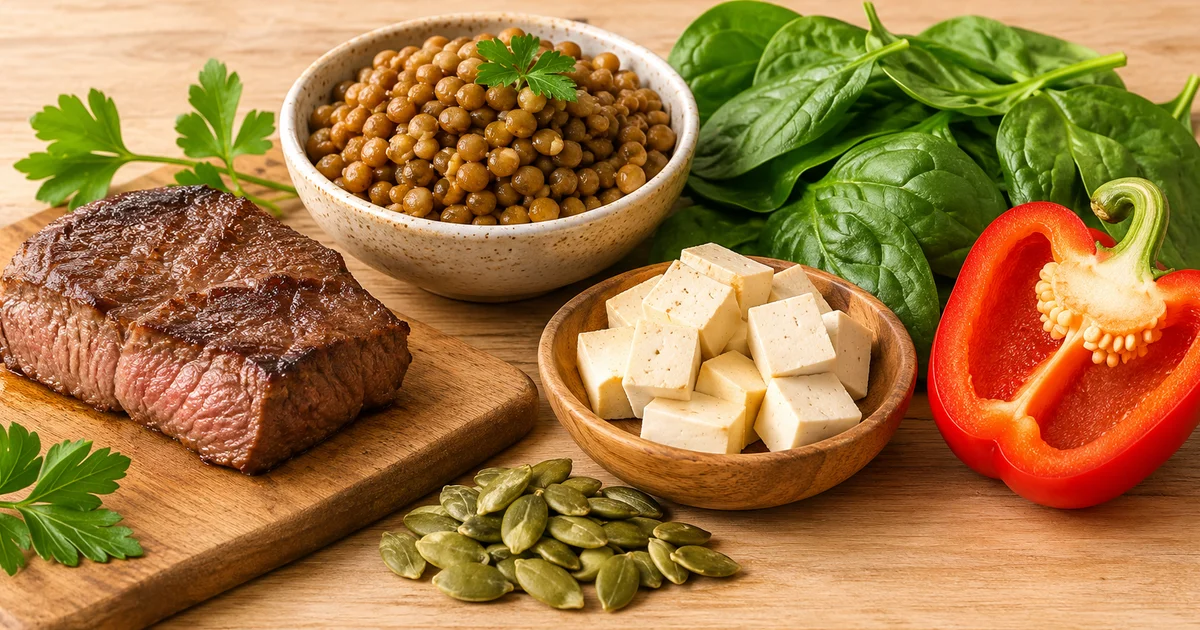
Heme iron is found only in animal products. It is the form of iron that is already incorporated into hemoglobin and myoglobin — the oxygen-carrying proteins in animal blood and muscle. Because it arrives in the gut in a form the intestinal cells can absorb directly, heme iron is absorbed at a rate of roughly 15–35% of what is consumed (Hurrell & Egli, 2010). Red meat (particularly beef), organ meats (like liver), shellfish (oysters, clams, mussels), and dark poultry meat are among the richest heme iron sources.
Non-heme iron is found in both plant and animal foods, but it is the primary form of iron in plant foods. Unlike heme iron, non-heme iron must first be converted to a form the gut can absorb — a process that is more variable and more easily disrupted by other dietary factors. Absorption of non-heme iron ranges from roughly 2–20%, depending on factors that either enhance or inhibit the process (Hurrell & Egli, 2010). Legumes (lentils, chickpeas, kidney beans), tofu, fortified cereals, dark leafy greens (spinach, kale), pumpkin seeds, and dried fruits are plant-based iron sources.
This difference explains a well-established pattern in the nutrition literature: people who do not eat meat are at higher statistical risk for iron deficiency, not because plant foods lack iron, but because the iron they contain is absorbed less efficiently. Understanding absorption is therefore as important as knowing which foods are iron-rich.
3. Iron-Rich Foods by Category
The following outlines the major iron-rich food categories, organized by iron form:
Animal sources (primarily heme iron): – Red meat — beef, lamb — particularly lean cuts – Organ meats — liver, kidney (very high iron content per serving) – Shellfish — oysters, clams, and mussels are exceptionally rich – Canned fish — sardines and tuna in particular – Dark poultry meat (thighs and drumsticks more than breast)
Plant sources (non-heme iron): – Legumes — lentils, chickpeas, kidney beans, black beans, edamame – Tofu and tempeh (iron content varies by preparation and firmness) – Dark leafy greens — spinach, kale, Swiss chard – Seeds — pumpkin seeds, hemp seeds, sesame seeds/tahini – Fortified cereals and grain products (check labels — iron content varies significantly) – Dried fruit — apricots, raisins, prunes
Mixed animal/plant sources (non-heme iron in animal foods): – Eggs (particularly egg yolks) – Dairy products contain very little iron
Iron content per serving varies significantly within these categories depending on preparation method, food form, and individual product. Cooked legumes and greens generally deliver more iron per gram than raw, because cooking reduces water content and volume.
4. What Enhances Non-Heme Iron Absorption
Because non-heme iron absorption is so variable, what you eat alongside iron-rich plant foods meaningfully changes how much iron your body actually takes in.
Vitamin C is the most well-established absorption enhancer. Consuming vitamin C-rich foods at the same meal as non-heme iron sources significantly increases absorption — vitamin C converts non-heme iron from ferric (Fe³⁺) to ferrous (Fe²⁺) form, the form that intestinal cells absorb most efficiently. The effect is dose-dependent: more vitamin C at the same meal produces greater enhancement. Practical examples: squeezing lemon juice over lentil soup; eating a bell pepper alongside a bean dish; adding fresh tomato or berries to a grain bowl with fortified cereal.
The “meat factor.” Eating lean meat, poultry, or fish alongside plant foods containing non-heme iron increases absorption of the non-heme iron in that same meal. The mechanism is not fully understood but appears to involve compounds in animal muscle tissue that promote non-heme iron absorption. This effect provides a practical strategy for people who eat some but not large amounts of animal protein.
Fermentation. Fermented foods made from iron-containing plants — such as fermented tofu, tempeh, or certain fermented grain preparations — tend to have higher iron bioavailability than their non-fermented counterparts, partly because fermentation reduces phytates, compounds that otherwise inhibit absorption.
5. What Reduces Non-Heme Iron Absorption
Several common dietary compounds reduce the absorption of non-heme iron. Being aware of these does not mean avoiding these foods — they carry their own nutritional and health value — but it does suggest some strategic timing.
Polyphenols in tea and coffee. The tannins in tea — including herbal teas — and the chlorogenic acids in coffee bind non-heme iron in the gut and reduce its absorption, sometimes substantially. Studies have found that drinking tea with an iron-rich meal can reduce non-heme iron absorption by 50–80%. The practical implication is straightforward: wait at least an hour after eating before drinking tea or coffee, or drink them between meals rather than with food.
Calcium. High amounts of calcium consumed in the same meal can competitively reduce both heme and non-heme iron absorption. A large glass of milk alongside a high-iron meal slightly competes for absorption. This does not mean calcium-rich foods and iron-rich foods should never be combined — the effect is modest at typical serving sizes — but for people who are specifically trying to maximize iron absorption, timing calcium-rich foods separately from iron-rich meals can help.
Phytates. Phytic acid (phytates) is found in whole grains, legumes, and seeds — the same foods that are often the primary iron sources in plant-forward diets. Phytates bind non-heme iron and inhibit its absorption. Preparation methods that reduce phytate content — soaking legumes before cooking, sprouting grains and seeds, using leavened rather than unleavened bread — can meaningfully improve iron bioavailability. Fermentation (as noted above) is particularly effective.
Heme iron absorption is much less affected by these factors — polyphenols, calcium, and phytates have little impact on heme iron. This is part of why heme iron’s absorption is more predictable.
6. Iron Balance and Practical Meal Strategies
Iron deficiency is among the most common nutritional deficiencies worldwide, particularly affecting women of reproductive age, children, and people with limited access to diverse foods or animal products. But iron balance is a two-way consideration: the body has no active mechanism for excreting excess iron, and over-accumulation can cause harm. For this reason, managing iron intake through dietary strategies is appropriate for most people; individual assessment of iron status is the appropriate route when deficiency is suspected.
It is also worth noting that the relationship between dietary iron intake and disease associations is not linear. Research on dietary iron and certain health outcomes is active. For example, systematic review evidence has found associations between elevated iron intake and body iron status with certain cancer risks (Chang et al., 2019) — a finding that underscores why iron balance, rather than maximum iron intake, is the appropriate frame for dietary guidance. The goal is adequacy and variety, not maximizing iron consumption as an end in itself.
Three practical strategies for better non-heme iron absorption:
1. Pair iron-rich plant foods with vitamin C at the same meal. This is the single most effective dietary strategy for improving non-heme iron absorption. Lentils with roasted red peppers; spinach salad with citrus dressing; oatmeal with fresh strawberries — these combinations take advantage of the vitamin C enhancement effect.
2. Time tea and coffee between meals rather than with food. If you regularly eat iron-rich plant foods and drink tea or coffee, shifting those beverages to at least an hour after a meal reduces the absorption-inhibiting effect without requiring any change to food choices.
3. Soak and cook legumes properly. Soaking dried legumes for several hours before cooking and discarding the soaking water reduces phytate content. This is an easy preparation step that meaningfully improves the iron bioavailability of an already-iron-rich food.
If you follow a plant-forward diet, a simple audit of your typical meals can reveal easy wins: note whether iron-rich meals include a vitamin C source (fresh vegetables, citrus), whether you drink tea close to meal times, and whether legumes are soaked before cooking. Changing one of these is often more impactful than switching to different iron-rich foods entirely.
7. Keep Reading
For the full picture of essential vitamins and minerals — including how iron fits within the trace mineral category — see Essential Vitamins and Minerals: A Research-Based Overview.
Vitamin D plays a role in how the body regulates a range of micronutrient functions — Vitamin D: Food Sources, Sun Exposure, and What the Research Shows covers how to get it from food and sun exposure, and why widespread inadequacy makes it worth tracking.
Iron and calcium can compete for absorption when consumed together in high amounts — Calcium and Bone Health: Sources Beyond Dairy covers dietary calcium sources and strategies that support bone health alongside iron-conscious meal planning.
8. Frequently Asked Questions
Is spinach actually a good source of iron?
Spinach contains a meaningful amount of non-heme iron per gram of dry weight, but the raw spinach on a salad is mostly water — actual iron per cup of raw spinach is modest. Cooked spinach provides substantially more per serving because cooking concentrates the leaf. More importantly, spinach also contains oxalates — compounds that can further reduce non-heme iron absorption. Spinach contributes to iron intake but works best as part of a varied approach rather than as a primary iron strategy. Pairing cooked spinach with a vitamin C source does enhance the non-heme iron it does contain.
Can cooking in cast iron cookware add iron to food?
Yes, cooking acidic foods (such as tomato-based sauces or citrus-marinated proteins) in cast iron cookware can transfer small amounts of iron into the food. This is a real phenomenon but the contribution varies enormously depending on the acidity of the food, cooking time, and the condition of the pan. It is unlikely to serve as a primary iron strategy, but it can add a modest supplementary contribution to iron intake.
How do I know if I am getting enough iron from my diet?
Low iron intake over time can eventually lead to iron deficiency anemia, with symptoms including persistent fatigue, cold intolerance, pale skin, and brittle nails. These symptoms overlap with many other conditions and are not reliable diagnostic indicators on their own. A blood test measuring serum ferritin and hemoglobin is the appropriate way to assess iron status. If you follow a plant-based diet, have heavy menstrual periods, or have other risk factors for deficiency, discussing iron status with a healthcare provider is a reasonable step.
Does cooking destroy the iron in food?
Iron is a mineral and is not degraded by heat — unlike vitamin C and some B vitamins. Cooking does not reduce the iron content of food, and for many plant foods (legumes, grains, greens) cooking actually improves iron bioavailability by breaking down cell walls and reducing some inhibitory compounds. The main variable is the cooking method’s effect on other factors — for example, boiling and discarding the water can remove water-soluble vitamins alongside some phytates.
References
- Chang, V. C., et al. (2019). Iron intake, body iron status, and risk of breast cancer: A systematic review and meta-analysis. BMC Cancer, 19(1), 543. https://pubmed.ncbi.nlm.nih.gov/31170936/
- Hurrell, R., & Egli, I. (2010). Iron bioavailability and dietary reference values. American Journal of Clinical Nutrition, 91(5), 1461S–1467S. https://pubmed.ncbi.nlm.nih.gov/20200263/
This article was drafted with AI assistance and reviewed and approved by The Psychanatomy Editorial Team before publication.

