Skip to content
No results
  • Home
  • Abuse & Recovery
    • P1 — Narcissistic Abuse
    • P2 — Psychological Damage
    • P3 — Trauma Recovery
    • P4 — Recognition & Prevention
    • P5 — Narcissism in Specific Contexts
    • P6 — Children, Parenting & Intergenerational Trauma
    • P7 — Life Rebuilding After Abuse
    • P8 — Empowerment, Advocacy & Awareness
  • Wellness
    • W1 — Nutrition & Healthy Eating
    • W2 — Sleep Health
    • W3 — Fitness & Movement
    • W4 — Healthy Living
  • About
  • Contact
logo cropped removebg preview
Psychanatomy
  • P3 — Trauma Recovery

Trauma-Related Guilt After Abuse: Guilt Over What You Did, Didn’t Do, or Couldn’t Prevent

A narrow dirt footpath winding through a field of tall grass, seen from above in soft evening light.

Trauma-related guilt after abuse often points at your own choices — staying, protecting, not leaving sooner — and that specific, action-oriented quality is what distinguishes it from shame and what makes it possible to address directly.

  • Dr. Imad Alkamal
  • September 25, 2026
  • P3 — Trauma Recovery

Healing Shame After Abuse: What Reduces Shame and What the Evidence Shows

A green canvas tarp folded back from part of a stacked pile of split firewood, the uncovered logs in soft sunlight.

Healing shame after abuse rarely happens just because the relationship has ended — shame tends to persist as a conditioned self-assessment, and reducing it requires specific approaches rather than time and distance alone.

  • Dr. Imad Alkamal
  • September 25, 2026
  • P3 — Trauma Recovery

Double-Checking After Gaslighting: Why Repeated Checking Erodes Memory Confidence and How to Ease Off

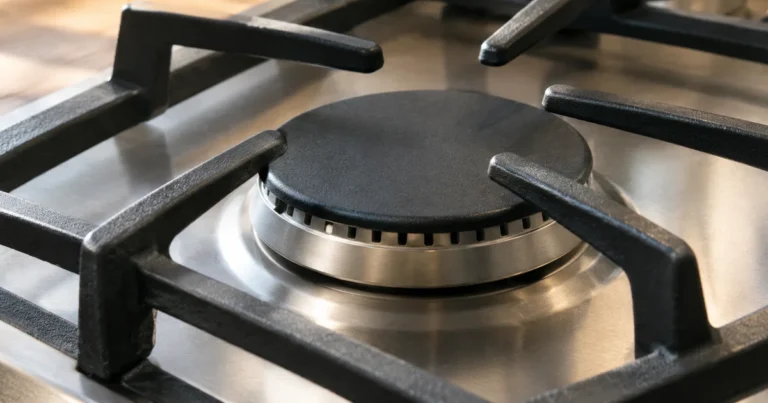
A clean, unlit gas stovetop burner under a black cast-iron grate, with no flame and no pot on the stove.

Double-checking after gaslighting can start as a reasonable response and become its own source of erosion — the act of verification, repeated often enough, undercuts the very confidence it is meant to build.

  • Dr. Imad Alkamal
  • September 24, 2026
  • P3 — Trauma Recovery

Cognitive Restructuring After Trauma: How It Works, What the Evidence Shows, and Where Self-Practice Fits

A brass plumb bob hanging still on a thin cord beside a vertical unfinished wooden post.

Cognitive restructuring after trauma is a structured way to examine beliefs, not suppress them — bringing the evidence for and against a thought into view rather than arguing yourself past it.

  • Dr. Imad Alkamal
  • September 24, 2026
  • P3 — Trauma Recovery

Recognizing Trauma-Related Beliefs: Self-Blame, a Threatening World, and a Changed Sense of Self

A still, clear rock pool seen from above, pebbles, empty shells and green seaweed visible on its sandy bottom.

Childhood emotional neglect is defined by what was absent — consistent attunement, validation, being known as a distinct person. Its effects show up in how adults relate to their own needs, not in direct memories of harm.

  • Dr. Imad Alkamal
  • September 24, 2026
  • P3 — Trauma Recovery

Cognitive Healing After Trauma: How Trauma-Related Beliefs Form, Change, and What the Evidence Shows

Fine wind-formed ripples running across the face of a sand dune, curving gently where the slope changes.

Parentification reverses the expected dynamic — the child becomes responsible for the parent's emotional wellbeing, stability, or practical needs. Its effects on identity development and adult relationships can be long-lasting and are often not recognized as anything unusual until adulthood.

  • Dr. Imad Alkamal
  • September 24, 2026
  • P3 — Trauma Recovery

Regulation vs Suppression: How to Tell Whether You Are Coping or Shutting Down

Two identical canvas drawstring pouches side by side, one open at the mouth and one cinched tightly shut.

Regulation and suppression can look identical from the outside and feel similar in the moment — both produce a calmer-appearing person — but they produce different physiological states and different long-term trajectories.

  • Dr. Imad Alkamal
  • September 22, 2026
  • P3 — Trauma Recovery

Containment Techniques After Trauma: How to Pause Processing Safely

A plain wooden box on a shelf, its fitted lid resting slightly askew rather than closed.

Containment techniques help pause difficult material when you cannot process it right now — a specific mental skill that creates separation between what has surfaced and your ability to function in the immediate moment.

  • Dr. Imad Alkamal
  • September 22, 2026
  • P3 — Trauma Recovery

What to Do During an Emotional Flashback: An In-the-Moment Protocol

A length of plain twine lying straight along a pale plaster surface, with evenly spaced knots along it.

Post-separation coercive control is real — departure does not end control, it redirects it through legal systems, shared children, mutual networks, and economic entanglement. Understanding this in advance is the difference between being repeatedly destabilized and having a response ready.

  • Dr. Imad Alkamal
  • September 22, 2026
  • P3 — Trauma Recovery

The 5-4-3-2-1 Grounding Method: What It Is, How It Works, and What the Evidence Does and Does Not Show

Five small squares of wood, cloth, stone, cork and brushed metal in a diagonal line on dark wood.

Escaping coercive control involves different safety planning than leaving a relationship with primarily episodic violence — the risk profile is different, and many of the most dangerous moments are concentrated around departure rather than embedded in daily life.

  • Dr. Imad Alkamal
  • September 22, 2026
Prev
1 2 3 4 5 6 7 8
Next

Psychanatomy

logo cropped removebg preview

Affiliate Disclosure

This website contains affiliate links, meaning we may earn a commission if you purchase through them, at no extra cost to you. We only recommend products we believe are genuinely helpful and relevant to psychology and mental well-being.

Policies

  • Privacy Policy
  • Editorial Policy
  • Terms and Conditions
  • Affiliate Disclosure
  • Refund Policy
  • Legal Disclaimer
  • Cookie Policy

Explore

  • Home
  • Abuse & Recovery
  • Wellness
  • About
  • Contact

Copyright © 2026 Psychanatomy - All rights reserved

Manage Consent
To provide the best experiences, we use technologies like cookies to store and/or access device information. Consenting to these technologies will allow us to process data such as browsing behavior or unique IDs on this site. Not consenting or withdrawing consent, may adversely affect certain features and functions.
Functional Always active
The technical storage or access is strictly necessary for the legitimate purpose of enabling the use of a specific service explicitly requested by the subscriber or user, or for the sole purpose of carrying out the transmission of a communication over an electronic communications network.
Preferences
The technical storage or access is necessary for the legitimate purpose of storing preferences that are not requested by the subscriber or user.
Statistics
The technical storage or access that is used exclusively for statistical purposes. The technical storage or access that is used exclusively for anonymous statistical purposes. Without a subpoena, voluntary compliance on the part of your Internet Service Provider, or additional records from a third party, information stored or retrieved for this purpose alone cannot usually be used to identify you.
Marketing
The technical storage or access is required to create user profiles to send advertising, or to track the user on a website or across several websites for similar marketing purposes.
  • Manage options
  • Manage services
  • Manage {vendor_count} vendors
  • Read more about these purposes
View preferences
  • {title}
  • {title}
  • {title}

Review My Order

0

Subtotal

Taxes & shipping calculated at checkout

Checkout
0

Notifications