
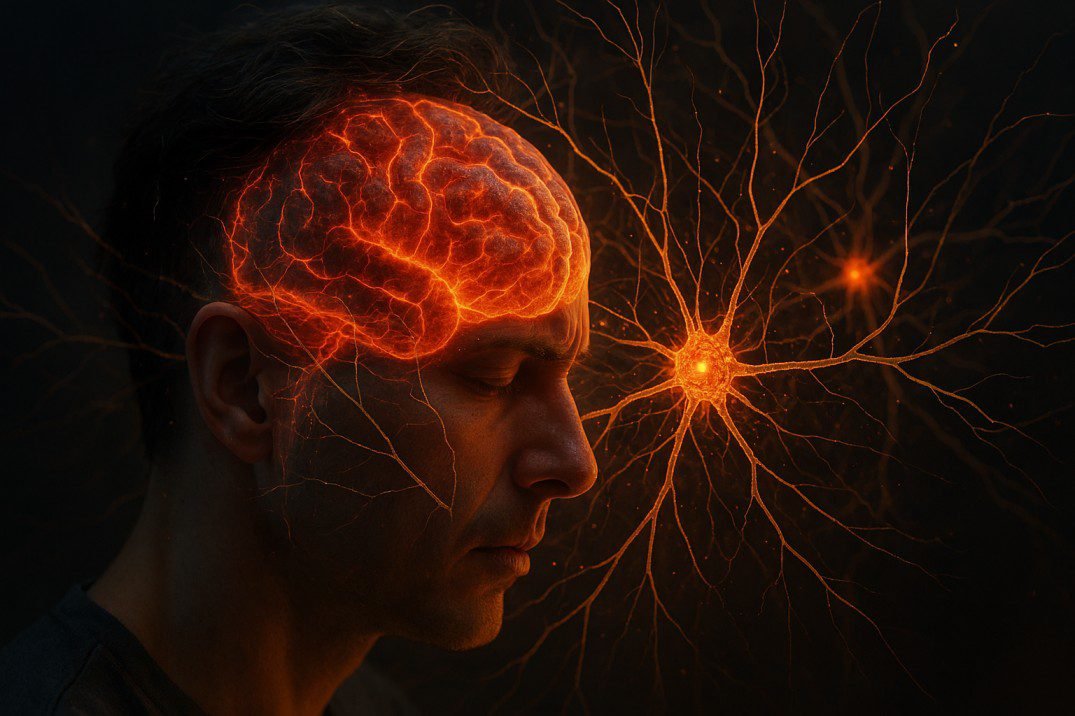
If you’ve ever felt like your brain “took over” during a moment of fear—or if you’ve been confused about why certain memories feel frozen in time while others disappear entirely—you’re not alone. How trauma hijacks your brain is not just an emotional experience. Trauma doesn’t just affect how you feel; it physically changes how your brain processes danger, stores memories, and keeps you safe.
Understanding what’s happening inside your brain during and after trauma can help you make sense of reactions that might feel confusing, overwhelming, or out of your control — and it can also illuminate the deeper steps involved in healing from past trauma.
What Does It Mean When How Trauma Hijacks Your Brain Becomes Your Reality?
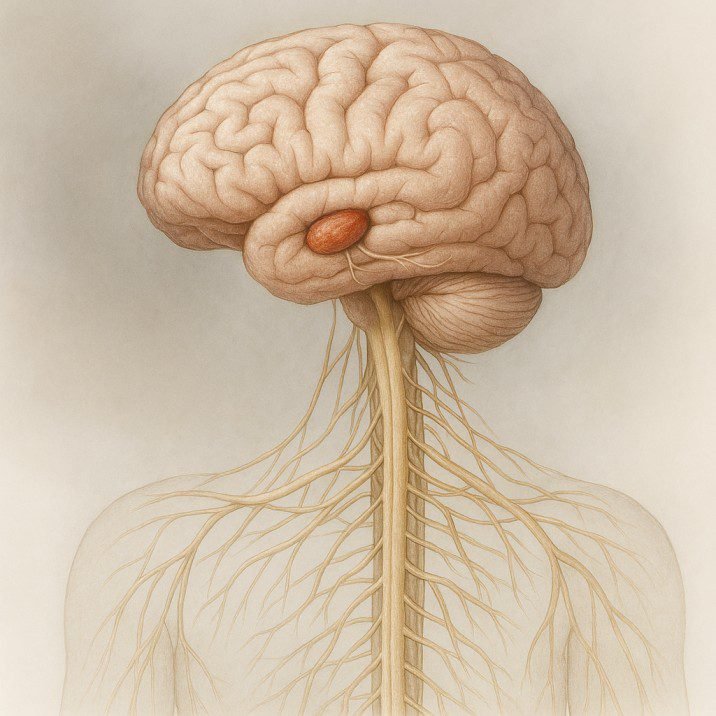
When we say trauma hijacks your brain, we’re describing a neurological process where your brain’s survival systems override your conscious thinking. During a traumatic event, the amygdala—a small, almond-shaped structure deep in your brain—detects danger and triggers an immediate survival response before your rational mind can fully process what’s happening.
This hijacking isn’t a sign of weakness. It’s an ancient protective mechanism designed to keep you alive. However, after trauma, this system can become overactive, causing your brain to perceive threats even when you’re safe.
What It Feels Like When Your Brain Goes Into Survival Mode
People describe the experience of trauma-related brain hijacking in strikingly similar ways:
“I couldn’t think. My body just moved on its own.”
“Everything happened in slow motion, but also too fast to process.”
“I remember some details with perfect clarity—the color of the walls, the sound of a door closing—but I can’t remember other parts at all.”
“Now, even safe situations make my heart race. My body reacts before my mind catches up.”
You might notice your hands shaking, your breathing becoming rapid and shallow, or a sudden urge to run or freeze—even in situations that don’t warrant that level of response. You might feel disconnected from your body, as if you’re watching yourself from the outside. Or you might find yourself unable to recall important details about what happened, while simultaneously being unable to forget specific sensory fragments.
These reactions are often misunderstood unless you understand how trauma, PTSD, and CPTSD affect the nervous system differently.
These aren’t signs that something is wrong with you. They’re signs that your brain is doing exactly what it evolved to do: prioritize survival above everything else.
Why Trauma Changes How Your Brain Works
Your brain has two primary systems for processing information: a fast, automatic survival system and a slower, thoughtful reasoning system.
The amygdala serves as your brain’s smoke detector. It constantly scans your environment for potential threats, comparing current experiences against past dangers. When it detects a match—or even something similar—it triggers an instant alarm.
This alarm activates your sympathetic nervous system, flooding your body with stress hormones like cortisol and adrenaline. Your heart rate increases. Blood flows to your large muscles. Your pupils dilate. Your digestive system slows down. All of this happens in milliseconds, long before your prefrontal cortex—the part of your brain responsible for rational thought, planning, and decision-making—can fully engage.
During trauma, the hippocampus struggles to do its job. The hippocampus is responsible for processing experiences into narrative memories with a clear beginning, middle, and end, complete with context and time stamps. But high levels of stress hormones interfere with hippocampal function. This is why traumatic memories often feel fragmented, timeless, or frozen—they were never fully processed into coherent narratives.
Instead, traumatic experiences get stored as sensory fragments: images, sounds, smells, body sensations. These fragments can be triggered unexpectedly, causing you to re-experience the emotional and physical intensity of the original trauma without the contextual understanding that would help you recognize you’re safe now — especially when you understand why trauma is held inside the body through somatic memory.
Your brain learns very quickly from trauma. From an evolutionary perspective, this makes perfect sense. If something nearly killed you once, your brain wants to make absolutely certain you avoid it in the future. This is called fear conditioning, and it happens through rapid, powerful learning in the amygdala.
The problem is that traumatized brains often overgeneralize. If trauma occurred in a specific context—say, at night, or in a car, or during an argument—your amygdala may begin flagging all similar contexts as dangerous, even when they’re objectively safe.
Signs Your Brain May Be Operating in Survival Mode
Trauma changes brain function in ways that can persist long after the danger has passed. You might notice:
Physical and emotional hyperarousal:
• Feeling constantly on edge or unable to relax
• Experiencing an exaggerated startle response
• Having difficulty sleeping or staying asleep
• Feeling irritable or experiencing sudden anger
• Rapid heartbeat or breathing in response to reminders
Intrusive re-experiencing:
• Flashbacks that feel like you’re reliving the trauma
• Nightmares or distressing dreams
• Intense physical reactions to reminders
• Unwanted, distressing memories that intrude suddenly
Avoidance and numbing:
• Going out of your way to avoid people, places, or situations that remind you of trauma
• Feeling emotionally numb or disconnected
• Difficulty remembering parts of the traumatic experience
• Loss of interest in activities you once enjoyed
• Feeling detached from your own emotions or body
Changes in thinking and mood:
• Difficulty concentrating or making decisions
• Persistent negative beliefs about yourself or the world
• Feelings of shame, guilt, or self-blame
• Difficulty trusting others
• Feeling like danger is everywhere
These symptoms reflect a brain and body that remain locked in survival mode, continuing to protect you from a danger that may no longer exist.
How Trauma Affects Your Mental Health and Daily Life
Living with a hijacked nervous system is exhausting. The constant state of vigilance drains your energy, impairs your sleep, and makes it difficult to experience joy or connection.
Relationships often suffer. When your amygdala is hypersensitive, you might misinterpret neutral expressions as threatening, withdraw from people who care about you, or react with intensity to minor conflicts. Partners, friends, and family members may feel confused by your reactions or feel they’re “walking on eggshells.”
Work and daily functioning become harder. Concentration problems, memory difficulties, and emotional reactivity can interfere with your ability to perform at work, maintain routines, or complete basic tasks. You might find yourself avoiding situations that once felt manageable.
Your physical health can decline. Chronic activation of your stress response system is linked to increased risk of cardiovascular disease, autoimmune conditions, chronic pain, gastrointestinal problems, and other health issues. Your body wasn’t designed to maintain this level of alert indefinitely.
Mental health conditions often develop. Post-traumatic stress disorder (PTSD), depression, anxiety disorders, and substance use disorders are all associated with trauma-related changes in brain function. These aren’t separate problems—they’re often direct consequences of living in survival mode.
What Actually Helps: Evidence-Based Approaches to Healing
The most important thing to understand is that your brain’s neuroplasticity—its ability to change and adapt—means healing is possible. The same brain that learned to protect you from danger can learn to feel safe again.
Trauma-focused therapy helps retrain your brain. Approaches like Cognitive Processing Therapy (CPT), Prolonged Exposure (PE), and Eye Movement Desensitization and Reprocessing (EMDR) have strong research support. These therapies help your brain fully process traumatic memories, update threat assessments, and reduce amygdala hyperactivity.
Somatic and body-based approaches address the survival response. Since trauma is stored in the body as well as the mind, approaches that work directly with your nervous system—like Somatic Experiencing, trauma-sensitive yoga, and sensorimotor psychotherapy—can help you discharge stored survival energy and restore regulation.
Mindfulness practices create space between stimulus and response. Regular mindfulness meditation has been shown to reduce amygdala reactivity while strengthening prefrontal cortex function. Even brief daily practices can help you notice your body’s early warning signs and choose how to respond rather than reacting automatically.
Building a sense of safety in your body and environment is foundational. This might include establishing predictable routines, creating safe physical spaces, connecting with safe relationships, and learning grounding techniques that help you return to the present moment when triggered.
Medication can support the healing process for some people. Selective serotonin reuptake inhibitors (SSRIs) are FDA-approved for PTSD and can help reduce hyperarousal and intrusive symptoms while you engage in therapy. Other medications may help with specific symptoms like sleep disturbances or severe anxiety.
Social connection serves as a powerful regulator. Your nervous system co-regulates with the nervous systems of safe others. Being in the presence of calm, attuned people helps your brain learn that the world can be safe. This is why therapeutic relationships and supportive communities are so healing.
Tools and Resources That Can Support Your Healing
While professional treatment is often necessary for trauma recovery, several tools can support the healing process:
Grounding and regulation tools like weighted blankets, stress balls, or fidget devices can help activate your parasympathetic nervous system and provide sensory input that counteracts hyperarousal.
Guided meditation apps and audio programs offer structured ways to practice mindfulness, body awareness, and relaxation techniques that gradually retrain your nervous system.
Journaling resources specifically designed for trauma processing can help you safely explore your experiences, track patterns, and practice putting fragmented memories into narrative form.
Psychoeducation books and workbooks that explain the neuroscience of trauma in accessible language can reduce shame and provide concrete exercises for building regulation skills.
Biofeedback and neurofeedback devices offer real-time information about your physiological state, helping you learn to recognize and shift your nervous system activation.
Sleep hygiene tools like blackout curtains, white noise machines, or sleep tracking devices can support the quality rest your brain needs to heal.
Movement and exercise resources including trauma-informed yoga videos, gentle stretching guides, or walking programs that help release stored survival energy from your body.
You Can Heal—Your Brain Is Still Learning
Your brain’s response to trauma reflects extraordinary adaptation, not damage. The same neural pathways that learned to keep you safe from danger can learn new patterns. The amygdala that became hypersensitive can gradually calm. The memories that feel frozen can be processed and integrated.
Healing doesn’t mean forgetting what happened or pretending it didn’t affect you. It means giving your brain the support it needs to recognize that the danger has passed, to process what happened in a way that gives you back your sense of control, and to restore your capacity for safety, connection, and presence.
This is why understanding the long-term psychological effects trauma leaves on the mind is such an important foundation for meaningful, sustainable recovery.
If you’re living with the effects of trauma, you’re not broken. Your brain is doing what it learned to do to survive. And with the right support, it can learn something new: that you’re safe now, and the future can be different from the past.
References
American Psychiatric Association. (2013). Diagnostic and statistical manual of mental disorders (5th ed.). https://doi.org/10.1176/appi.books.9780890425596
Bremner, J. D. (2006). Traumatic stress: Effects on the brain. Dialogues in Clinical Neuroscience, 8(4), 445-461. https://doi.org/10.31887/DCNS.2006.8.4/jbremner
LeDoux, J. E. (2000). Emotion circuits in the brain. Annual Review of Neuroscience, 23, 155-184. https://doi.org/10.1146/annurev.neuro.23.1.155
National Institute of Mental Health. (2023). Post-traumatic stress disorder. U.S. Department of Health and Human Services. https://www.nimh.nih.gov/health/topics/post-traumatic-stress-disorder-ptsd
Phelps, E. A., & LeDoux, J. E. (2005). Contributions of the amygdala to emotion processing: From animal models to human behavior. Neuron, 48(2), 175-187. https://doi.org/10.1016/j.neuron.2005.09.025
Rauch, S. L., Shin, L. M., & Phelps, E. A. (2006). Neurocircuitry models of posttraumatic stress disorder and extinction: Human neuroimaging research—past, present, and future. Biological Psychiatry, 60(4), 376-382. https://doi.org/10.1016/j.biopsych.2006.06.004
Shapiro, F. (2018). Eye movement desensitization and reprocessing (EMDR) therapy: Basic principles, protocols, and procedures (3rd ed.). Guilford Press.
Substance Abuse and Mental Health Services Administration. (2014). SAMHSA’s concept of trauma and guidance for a trauma-informed approach. HHS Publication No. (SMA) 14-4884. https://store.samhsa.gov/product/SAMHSA-s-Concept-of-Trauma-and-Guidance-for-a-Trauma-Informed-Approach/SMA14-4884
van der Kolk, B. A. (2015). The body keeps the score: Brain, mind, and body in the healing of trauma. Penguin Books.
World Health Organization. (2013). Guidelines for the management of conditions specifically related to stress. https://www.who.int/publications/i/item/9789241505406
