
If you find yourself constantly scanning for danger, startling at small sounds, or feeling like you can never fully relax even though the abuse has ended, you’re not alone—and you’re not broken. What you’re experiencing is a common psychological response to trauma, often called trauma anxiety after abuse or hypervigilance, and it’s your nervous system trying to protect you from threats that are no longer present. Understanding how trauma affects your mind and body is essential, and learning about the psychological damage after abuse can help validate what you’re experiencing and why these reactions occur.
What Is Trauma Anxiety After Abuse?
Trauma anxiety after abuse is a persistent state of heightened alertness and fear that develops following experiences of abuse, violence, or other traumatic events. It occurs when your nervous system remains activated in survival mode long after the actual danger has passed. Unlike general anxiety, trauma anxiety after abuse is directly linked to past traumatic experiences and involves your brain’s attempt to prevent similar harm from happening again.
This condition is closely related to post-traumatic stress disorder (PTSD) and shares many features, including hypervigilance, emotional numbness alternating with intense fear, and difficulty feeling safe even in objectively safe environments. Understanding that your heightened state of alertness is a neurobiological response—not a personal flaw—is essential for trauma-informed healing.
What Trauma Anxiety Actually Feels Like
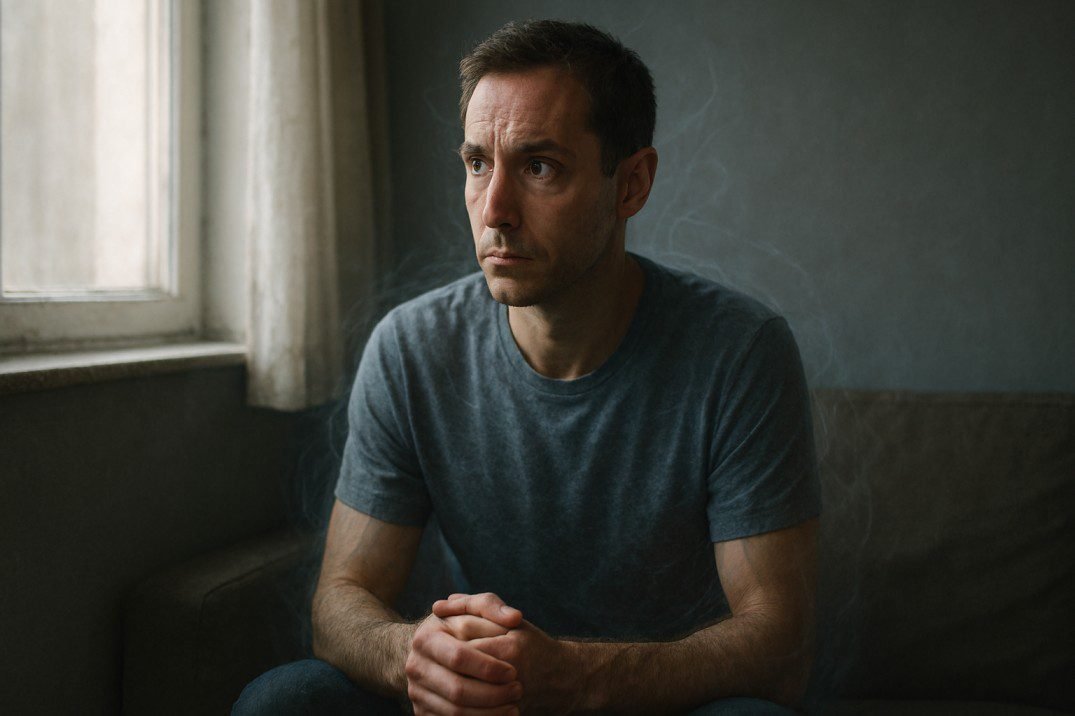
People living with trauma anxiety after abuse often describe feeling like they’re waiting for the other shoe to drop. You might find yourself constantly monitoring your surroundings, reading into every facial expression, or interpreting neutral situations as potentially threatening. Your body may feel tense and ready to react, even when you’re trying to rest.
Many survivors report feeling exhausted from being perpetually on guard. You might notice your heart racing when someone raises their voice, even if they’re not angry with you. Ordinary situations—a door slamming, someone walking behind you, or unexpected touch—can trigger intense physical reactions that feel disproportionate to the actual event. For a deeper look at why your nervous system stays alert even when danger is gone, see Hypervigilance After Trauma: Why Trauma Keeps You Alert.
Sleep often becomes difficult because your brain won’t shut off its threat-detection system. You might lie awake replaying scenarios, planning escape routes, or simply feeling too unsafe to let go into deep sleep. This chronic state of hyperarousal is a hallmark of trauma anxiety after abuse.
Why Your Nervous System Stays On High Alert
During abuse, your brain learned that danger could come at any moment. Your nervous system adapted by becoming extremely sensitive to potential threats—a survival mechanism that likely helped you navigate dangerous situations. The problem is that this protective system doesn’t automatically switch off when the danger ends.
Trauma fundamentally changes how your brain processes safety and threat. The amygdala, your brain’s alarm center, becomes overactive, while the prefrontal cortex—the part that helps you rationally assess danger—may become less able to regulate those alarm signals. This neurobiological shift means your body can react to perceived threats before your conscious mind has time to evaluate whether danger is actually present.
Research on trauma and the nervous system shows that repeated exposure to unpredictable abuse teaches the brain that the world is fundamentally unsafe. Your hypervigilance isn’t a character flaw or weakness—it’s evidence that your brain did exactly what it needed to do to help you survive.
Common Signs and Patterns of Trauma Anxiety After Abuse
Trauma anxiety after abuse can show up in various ways. You might recognize some of these patterns:
Physical symptoms:
- Muscle tension, especially in your jaw, shoulders, or stomach
- Rapid heartbeat or feeling like your heart is pounding
- Difficulty breathing deeply or feeling short of breath
- Digestive problems or nausea
- Chronic fatigue despite not doing physically demanding activities
- Frequent headaches or body aches
Emotional and mental patterns:
- Difficulty trusting people, even those who have proven themselves safe
- Intrusive thoughts about past abuse or fears about future harm
- Feeling disconnected from your body or emotions (dissociation)
- Intense irritability or anger that seems to come out of nowhere
- Difficulty experiencing positive emotions or feeling emotionally numb
- Overwhelming fear or panic in situations that remind you of the abuse
Behavioral responses:
- Avoiding people, places, or situations that feel potentially threatening
- Checking and rechecking locks, exits, or your surroundings
- Difficulty being in crowds or enclosed spaces
- Needing to position yourself where you can see exits or keep your back to a wall
- Isolating yourself to feel safer
- Overworking or staying constantly busy to avoid feeling vulnerable
For practical strategies to identify and navigate everyday triggers, many survivors find Everyday Trauma Triggers: How to Spot & Manage Them a helpful resource.
How Trauma Anxiety Affects Your Life
Living in a constant state of heightened alertness takes a significant toll. The chronic stress of trauma anxiety after abuse can contribute to physical health problems, including cardiovascular issues, weakened immune function, and chronic pain conditions. The mental and emotional exhaustion can lead to depression, difficulty concentrating, and problems with memory.
Relationships often suffer because trauma anxiety makes it difficult to be emotionally present and vulnerable with others. You might push people away when they get too close, misinterpret their intentions, or struggle to believe they genuinely care about you. The constant internal vigilance can make it hard to enjoy activities that once brought you pleasure.
Many survivors also experience shame about their anxiety symptoms, believing they should be “over it” by now or that their reactions are excessive. This self-criticism compounds the original trauma and can prevent people from seeking the support they deserve.
What Actually Helps
Healing from trauma anxiety after abuse is possible, though it typically happens gradually rather than all at once. Several evidence-based approaches have been shown to help rewire the nervous system and reduce symptoms:
- Trauma-focused therapy remains the gold standard for treatment. Approaches like Cognitive Processing Therapy (CPT), Eye Movement Desensitization and Reprocessing (EMDR), and Prolonged Exposure therapy have strong research support for reducing PTSD and trauma anxiety symptoms. These therapies help you process traumatic memories in a safe environment and gradually retrain your nervous system’s threat response.
- Somatic and body-based practices can be particularly helpful because trauma lives in the body as much as in the mind. Techniques like deep breathing, progressive muscle relaxation, and trauma-informed yoga help you reconnect with your body as a source of information rather than only threat. Learning to notice and shift your physical state can give you more control over anxiety symptoms.
- Grounding techniques can interrupt the anxiety spiral when it begins. Methods like the 5-4-3-2-1 technique (naming five things you see, four you can touch, three you hear, two you smell, and one you taste) help bring your awareness back to the present moment rather than staying stuck in past trauma or future fears.
- Building a sense of safety is foundational. This might include creating a physical environment where you feel secure, establishing daily routines that feel predictable, and gradually identifying which people and situations are genuinely safe. For many survivors, this also means setting boundaries and learning to say no without guilt.
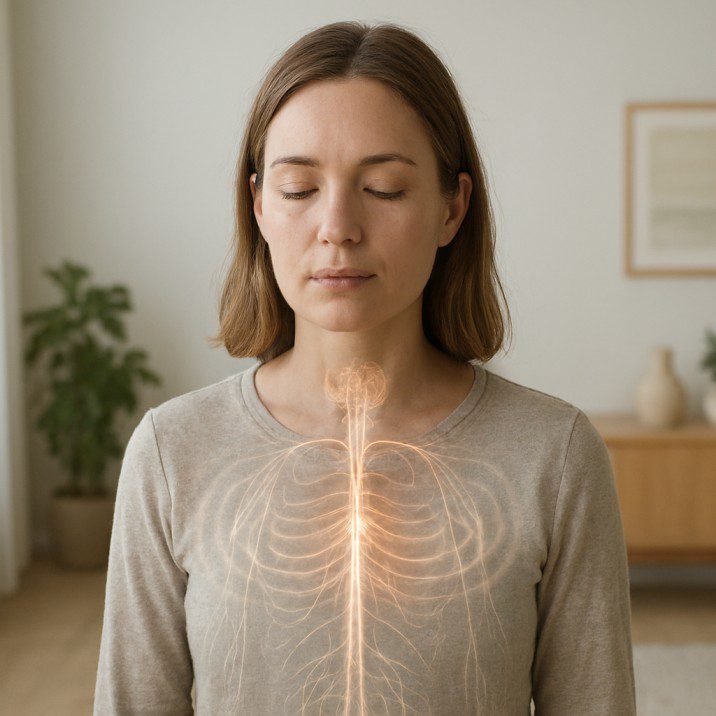
- Nervous system regulation practices like bilateral stimulation (alternating tapping or sensory input), humming, or gentle movement can help shift your system out of fight-or-flight mode. These practices work directly with your autonomic nervous system rather than trying to think your way out of anxiety.
Supportive Resources and Tools
As you work on healing, certain resources can make the process more manageable:
- Therapeutic tools and frameworks designed for trauma recovery can provide structure and validation. Workbooks focused on complex trauma, guided journals for processing difficult emotions, and educational materials about how trauma affects the brain can all help you understand what you’re experiencing.
- Community and connection resources remind you that you’re not alone. Peer support groups for trauma survivors, whether online or in-person, offer spaces where you don’t have to explain why small things feel overwhelming. Many people find that sharing their experiences with others who truly understand reduces shame and isolation.
- Self-regulation aids that engage your senses can be helpful during difficult moments. Weighted blankets that provide deep pressure input, noise-canceling headphones for overstimulating environments, or fidget tools that give your hands something to do can all support nervous system regulation.
- Mindfulness and meditation resources specifically adapted for trauma survivors take into account that traditional meditation can sometimes feel unsafe or triggering. Trauma-sensitive mindfulness practices focus on keeping you grounded and in control rather than asking you to empty your mind or sit with discomfort.
- Educational materials about trauma, the nervous system, and recovery can help you understand that your symptoms make sense given what you’ve been through. Books, podcasts, or articles by trauma specialists can normalize your experience and offer hope that healing is possible.
Moving Forward
Living with trauma anxiety after abuse is exhausting and painful, but it’s important to know that your nervous system’s response makes complete sense. You’re not damaged or weak—you’re dealing with the very real neurobiological aftermath of surviving dangerous situations.
Healing doesn’t mean forgetting what happened or never feeling anxious again. Instead, it means gradually expanding your capacity to feel safe, building trust in yourself and select others, and developing tools to regulate your nervous system when it becomes activated. The hypervigilance that once protected you can soften as you create new experiences of safety and prove to your brain that the world contains spaces where you can let your guard down. For guidance on comprehensive strategies to rebuild safety and resilience, explore our trauma recovery resources.
You deserve support as you navigate this healing process. Whether that comes through professional therapy, peer connection, or gentle daily practices that help you feel more grounded in your body and your life, there are paths forward. Your symptoms are not a life sentence—they’re a starting point for recovery.
References
American Psychological Association. (2017). Clinical practice guideline for the treatment of posttraumatic stress disorder (PTSD) in adults. https://www.apa.org/ptsd-guideline
Bisson, J. I., Berliner, L., Cloitre, M., Forbes, D., Jensen, T. K., Lewis, C., Monson, C. M., Olff, M., Pilling, S., Riggs, D. S., Roberts, N. P., & Shapiro, F. (2019). The International Society for Traumatic Stress Studies new guidelines for the prevention and treatment of posttraumatic stress disorder: Methodology and development process. Journal of Traumatic Stress, 32(4), 475–483.
National Institute of Mental Health. (2022). Post-traumatic stress disorder. U.S. Department of Health and Human Services. https://www.nimh.nih.gov/health/topics/post-traumatic-stress-disorder-ptsd
Payne, P., Levine, P. A., & Crane-Godreau, M. A. (2015). Somatic experiencing: Using interoception and proprioception as core elements of trauma therapy. Frontiers in Psychology, 6, 93.
Porges, S. W. (2011). The polyvagal theory: Neurophysiological foundations of emotions, attachment, communication, and self-regulation. W.W. Norton & Company.
Substance Abuse and Mental Health Services Administration. (2014). SAMHSA’s concept of trauma and guidance for a trauma-informed approach. HHS Publication No. (SMA) 14-4884. https://store.samhsa.gov/product/SAMHSA-s-Concept-of-Trauma-and-Guidance-for-a-Trauma-Informed-Approach/SMA14-4884
van der Kolk, B. A. (2015). The body keeps the score: Brain, mind, and body in the healing of trauma. Penguin Books.
World Health Organization. (2013). Guidelines for the management of conditions specifically related to stress. WHO Press. https://www.who.int/publications/i/item/9789241505406
