

Supporting Article (W1-S2-A2 · 1 of 6) | The Mediterranean Diet: What It Is and What the Evidence Shows
1. What This Article Covers
The Mediterranean diet is one of the most consistently studied dietary patterns in nutrition research. If you have heard it described as a “heart-healthy” way of eating, the evidence base is actually broader and more nuanced than that summary suggests. This article focuses specifically on this dietary pattern — what it actually is, how researchers define and measure it, and what the body of research has found.
For a wider comparison of evidence-based dietary patterns alongside the Mediterranean approach, see Evidence-Based Dietary Patterns: What the Research Actually Shows. This article goes deep on one thread of that broader picture.
2. What the Evidence Shows
This dietary pattern has one of the strongest evidence bases of any named eating approach. Research consistently associates it with reduced risk of cardiovascular disease and several cancers, among other health outcomes. Umbrella reviews — analyses that synthesize across multiple meta-analyses — have examined it from many angles.
One umbrella review found consistent protective associations between Mediterranean diet adherence and breast cancer risk across multiple independent study populations (González-Palacios Torres et al., 2023). Separately, meta-analytic evidence has found that anti-inflammatory dietary patterns closely aligned with Mediterranean principles are associated with reduced pain severity in rheumatoid arthritis (Schönenberger et al., 2021). Both findings come from observational evidence — they show associations with health outcomes, not direct proof of causation. Individual results vary.
The strength of this dietary pattern’s evidence base comes partly from how many independent research programs have studied it, across different countries, populations, and outcome measures. Consistency across independent studies is itself meaningful, even when no single study proves causation.
It also has more clinical trial evidence than most named dietary patterns. The PREDIMED and PREDIMED-Plus trials — large randomized controlled trials conducted in Spain — provided among the strongest available evidence that dietary guidance toward a Mediterranean pattern can produce meaningful differences in cardiovascular outcomes compared to control diet guidance, at least among high-risk populations (Estruch et al., 2018). These findings helped cement the pattern’s status among major health organizations worldwide.
3. What the Mediterranean Diet Actually Is
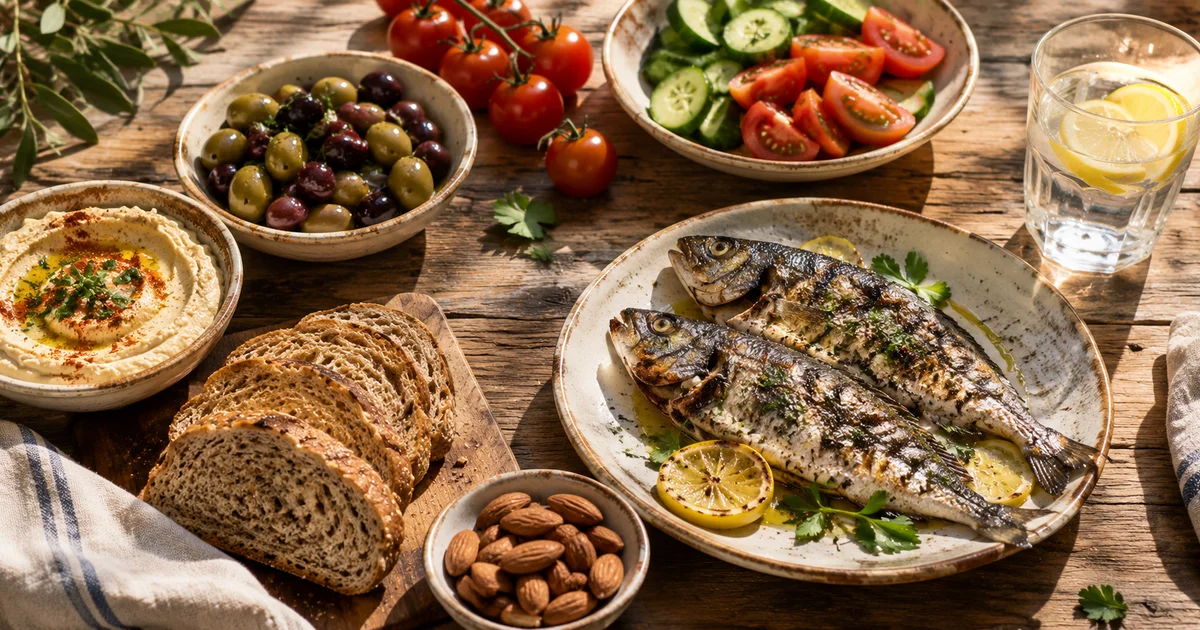
It is not a precise prescription. It describes a traditional eating pattern from countries bordering the Mediterranean Sea, particularly Greece, southern Italy, and Spain. Researchers have identified its consistent features and studied them as a package rather than focusing on individual foods.
Its defining elements include:
- Abundant plant foods — vegetables, legumes, whole grains, fruits, nuts, and seeds form the dietary base
- Olive oil as the primary fat, replacing butter and other saturated fats
- Fish and seafood regularly, typically several times per week
- Moderate poultry and dairy — eggs, cheese, and yogurt in moderate amounts
- Limited red and processed meat — consumed occasionally rather than daily
- Minimal ultra-processed foods — the traditional pattern involves mostly whole or minimally processed ingredients
- Herbs and spices used generously in place of excess salt
There is no single official Mediterranean diet protocol with fixed portion sizes. Different research programs have used different scoring systems to measure adherence. What these systems share is an emphasis on the overall pattern — the balance across food groups — rather than any one “superfood.”
4. The PREDIMED Trials and Clinical Evidence
The PREDIMED program produced some of the most cited clinical evidence for this eating pattern. These randomized trials assigned participants — primarily adults at high cardiovascular risk — to Mediterranean intervention groups supplemented with extra-virgin olive oil or mixed nuts, or to a control low-fat diet guidance group. The corrected analyses, following a partial retraction and republication in 2018 due to randomization issues in some sites, still found meaningful differences in cardiovascular event rates between groups.
This evidence is important context for how this dietary pattern is studied clinically. It also illustrates a limit of the research: the PREDIMED populations were older adults with high cardiovascular risk, and the findings may not translate identically to younger or lower-risk adults. Food quantities used in a clinical intervention — such as specific amounts of olive oil per day — should not be interpreted as personal prescriptions.
5. Anti-Inflammatory Mechanisms
Researchers have proposed several mechanisms through which the Mediterranean eating pattern might benefit health. The pattern as a whole — not any single component — appears to be what matters.
Extra-virgin olive oil is rich in monounsaturated fats and polyphenols, compounds with antioxidant activity. Fatty fish provide omega-3 fatty acids, which have anti-inflammatory associations. The high fiber content from legumes, whole grains, and vegetables supports gut microbiome diversity, which has emerging associations with immune function and systemic inflammation. Nuts and seeds contribute additional polyphenols and healthy fats.
The anti-inflammatory profile of the Mediterranean pattern is often cited as one reason it may support multiple health outcomes simultaneously — cardiovascular health, metabolic health, and even joint health in conditions like rheumatoid arthritis. No single food drives these effects. The combination and proportions are what distinguish the pattern.
6. Common Misconceptions
This eating pattern is not simply Italian or Greek restaurant food. Pizza, pasta in cream sauce, or restaurant interpretations of Mediterranean cuisine are often quite different from the research-characterized pattern. The diet emphasizes vegetables and legumes at every meal, fish regularly, and olive oil as the primary fat — elements that differ considerably from many restaurant versions.
Olive oil is not a supplement to add freely. The Mediterranean pattern replaces other fats with olive oil — particularly saturated fats from butter or processed oils. Adding olive oil on top of a diet already high in saturated fat does not replicate the pattern and substantially increases calorie density.
Wine is not a required or recommended component. Some research scoring systems note moderate wine consumption as part of the traditional pattern. However, current evidence does not support recommending alcohol for health benefits, and major health guidelines advise against starting to drink for this reason.
7. Practical Guidance
Adopting Mediterranean-aligned eating does not require wholesale dietary change. The evidence suggests that the overall pattern matters more than strict adherence to any ruleset, and that gradual shifts can move the diet meaningfully in a beneficial direction.
Three practical entry points:
1. Increase plant-food variety at meals. Aim to make vegetables and legumes the largest component of most meals. Include a variety of colors and types — this reflects the breadth of the traditional Mediterranean pattern. A handful of walnuts or almonds as a snack is a consistent feature of the evidence base.
2. Shift your primary fat source. Using olive oil as your main cooking and finishing fat — replacing butter or processed oils — is one of the most consistent changes across Mediterranean diet interventions. Extra-virgin olive oil is the type most often studied.
3. Include fish more often. Increasing fatty fish (such as salmon, sardines, or mackerel) to two or more servings per week is a recognized element of the pattern. People who do not eat fish can focus on the plant-food components while addressing omega-3 needs through algae-based sources if desired.
One useful starting point is to audit your current fat sources. If butter, cream, or processed vegetable oils are dominant, replacing them with olive oil for cooking and dressings is one of the most evidence-aligned shifts toward the Mediterranean pattern.
8. Keep Reading
This dietary pattern is one of several evidence-based approaches covered in Evidence-Based Dietary Patterns: What the Research Actually Shows, which examines how multiple patterns compare across the broader nutrition literature.
For readers exploring a dietary approach that emphasizes flexibility and psychological sustainability rather than a named pattern, Flexible Eating: A Framework for Sustainable Nutrition offers complementary practical guidance on building an eating approach that holds up over time.
If you are interested in shifting toward more plant-forward eating and want to understand the practical realities of that approach, Plant-Based Eating: A Practical Introduction covers what that shift actually involves and what to consider.
9. Frequently Asked Questions
Is the Mediterranean diet the healthiest diet?
It is among the most studied and consistently supported dietary patterns in nutrition research, but no single diet is definitively “the healthiest” for all people. The research shows consistent associations with several positive health outcomes across independent study populations. Individual health needs, food preferences, cultural context, and practical access to foods all matter in determining what eating pattern works for a given person.
Do I have to eat fish to follow this eating pattern?
Fish and seafood are a recognized element of the Mediterranean eating pattern, but the evidence base focuses on the overall pattern rather than any single food. People who do not eat fish can still align closely with the pattern by emphasizing its other core elements — olive oil, vegetables, legumes, whole grains, and nuts. For omega-3 fatty acids, plant-based algae oil is an option that provides EPA and DHA without fish.
How much olive oil is involved?
Research interventions have used substantial daily amounts of olive oil — some PREDIMED participants consumed four or more tablespoons per day as part of the study protocol (Estruch et al., 2018). The underlying principle is that olive oil serves as the primary fat source, replacing other fats rather than being added to an existing diet. For most adults, the practical goal is to shift existing fat sources toward olive oil rather than to reach any specific daily quantity.
Can this dietary pattern be followed on a budget?
The Mediterranean dietary pattern does not require expensive or specialty ingredients. Legumes (lentils, chickpeas, dried beans), canned fish (sardines, tuna, mackerel), frozen vegetables, and bulk whole grains are all consistent with the pattern and widely available at low cost. This traditional eating pattern was historically one of modest means — built on abundant local produce and legumes, with fish and meat as less frequent features rather than daily staples.
References
- Estruch, R., et al. (2018). Primary prevention of cardiovascular disease with a Mediterranean diet supplemented with extra-virgin olive oil or nuts. New England Journal of Medicine, 378(25), e34.
- González-Palacios Torres, C., et al. (2023). Mediterranean diet and risk of breast cancer: An umbrella review. Clinical Nutrition, 42(5), 740–749.
- Schönenberger, K. A., et al. (2021). Effect of anti-inflammatory diets on pain in rheumatoid arthritis: A systematic review and meta-analysis. Nutrients, 13(12), 4221.
This article was drafted with AI assistance and reviewed and approved by The Psychanatomy Editorial Team before publication.

