

Supporting Article (W1-S6-A4 · 4 of 7) | Prebiotics and Probiotics From Food: A Beginner’s Guide
1. What This Article Covers
Prebiotics and probiotics from food come up constantly in gut health discussions, often in the same breath and sometimes as if they were interchangeable. They are not interchangeable — they play different roles in the gut and come from largely different food sources, though some foods supply both. Understanding the distinction is the starting point for using them well.
This article explains what prebiotics and probiotics are, how they differ, which foods supply each, and what the evidence shows about their effects individually and together. It focuses on dietary food sources, not supplements. For the broader context of diet and the gut microbiome — including how fiber shapes gut bacterial communities and what fermented foods specifically do — Gut Health and Diet: What the Science Actually Shows covers the full landscape.
2. What Prebiotics Are
A prebiotic is a substrate that is selectively utilized by host microorganisms conferring a health benefit — the definition established by the International Scientific Association for Probiotics and Prebiotics (ISAPP) in its 2017 consensus statement (Gibson et al., 2017). In practical terms, most dietary prebiotics are specific types of fiber or plant-derived compounds that reach the colon intact and are preferentially fermented by beneficial bacterial species there.
The key word is selectively — and that selectivity is a matter of degree, not absolute specificity. Not all dietary fiber qualifies as prebiotic: the ISAPP definition requires both preferential use by beneficial microorganisms and a demonstrated health benefit, criteria not every fiber type meets. Prebiotic compounds preferentially support beneficial bacterial genera such as Bifidobacterium and Lactobacillus, and research on dietary fiber interventions in healthy adults consistently finds that prebiotic-rich foods reliably increase these genera — the two most broadly linked to positive gut outcomes (So et al., 2018).
Prebiotics do not need to be alive to work. Unlike probiotics, which must arrive as live microorganisms, prebiotics are non-living substrates. They work by being fermented — consumed and broken down by gut bacteria into short-chain fatty acids, particularly butyrate, that nourish the colon lining and regulate local immune signaling.
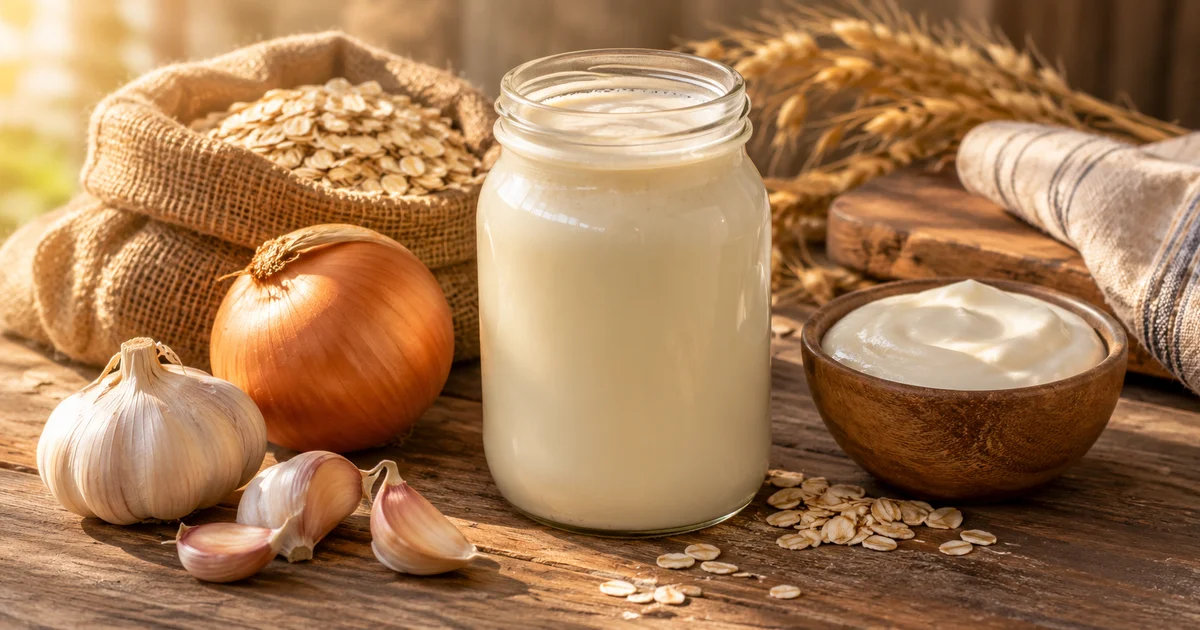
Prebiotic food sources include: – Garlic, onions, leeks, and asparagus (inulin and FOS) – Oats and barley (beta-glucan and mixed prebiotic fractions) – Legumes — beans, lentils, chickpeas (GOS and resistant starch) – Underripe bananas and cooked-and-cooled potatoes (resistant starch) – Chicory root and Jerusalem artichoke (the richest concentrated inulin sources)
3. What Probiotics Are
A probiotic is a live microorganism that, when consumed in adequate amounts, confers a health benefit on the host. The operative word is live: probiotics are living bacteria or yeasts that must survive transit through the stomach and upper intestine to reach the colon and produce their effects.
Probiotics differ from prebiotics in that they add living organisms to the gut environment rather than feeding the ones already there. The most studied probiotic genera are Lactobacillus and Bifidobacterium, which are the main microorganisms in yogurt and kefir. Some fermented foods also contain Saccharomyces yeasts and various Lactobacillus species specific to their fermentation tradition — kimchi and sauerkraut, for example, are predominantly Lactobacillus-driven.
An important distinction: not every fermented food contains viable probiotics. Fermentation creates the microorganisms, but pasteurization after fermentation kills them. Commercially shelf-stable kimchi, most commercially produced soy sauce, and many flavored yogurts are pasteurized after fermentation and contain no live bacteria by the time you eat them. Probiotic-containing foods are those whose live cultures survive into the final product — look for “live and active cultures” on dairy products, or choose unpasteurized refrigerated options for fermented vegetables.
Probiotic food sources with confirmed live cultures: – Yogurt and kefir with live and active cultures – Traditional, unpasteurized sauerkraut and kimchi (refrigerated) – Miso consumed at temperatures below 60°C (140°F) – Certain soft cheeses (cottage cheese, some aged cheeses) – Buttermilk and other traditionally cultured dairy products
4. What Synbiotics Are — and Why Some Foods Supply Both
A synbiotic is a food or supplement that provides both prebiotics and probiotics together. The idea is that the prebiotic substrate feeds and supports the probiotic organisms, creating a more favorable environment for them to colonize and produce their effects.
Some foods are naturally synbiotic. Yogurt is primarily a probiotic food — it contains live Lactobacillus and Bifidobacterium — but dairy also contains lactose and other carbohydrates that some gut bacteria use as substrate. Kefir has an even richer microbial community alongside its natural fermentation sugars. Fermented vegetables like kimchi supply prebiotic fiber from the vegetables themselves alongside their lactic acid bacteria — making them dual-action sources.
Intentionally combining prebiotic and probiotic foods in a meal creates a dietary synbiotic effect. A simple version is yogurt with sliced banana (live cultures + resistant starch) or kefir with oats (live cultures + beta-glucan). These are everyday dietary combinations, not clinical synbiotic formulations, but they give probiotic organisms a compatible food source and a more receptive gut environment.
The practical implication is that what you eat alongside a probiotic food matters. Probiotic bacteria thrive in a gut environment that already has substrate for them to use. A diet consistently high in diverse prebiotic fiber creates a more receptive gut for the live organisms that fermented foods introduce.
5. What the Evidence Shows About Effects Beyond the Gut
The evidence for prebiotics and probiotics centers on gut health effects — microbiome composition, intestinal barrier integrity, local immune signaling, and stool consistency and transit. These are the best-established effects and the ones directly tied to dietary food sources.
The evidence also extends to effects outside the gut. An umbrella review of clinical research on probiotic, prebiotic, and synbiotic interventions found consistent associations with improvements in neuropsychiatric outcomes, including measures of anxiety, depression, and cognitive function (Du et al., 2024). The proposed pathway runs through the gut-brain axis — the bidirectional communication network between the gut’s enteric nervous system and the brain — with gut bacteria producing neurotransmitter precursors and signaling molecules that influence brain function.
This broader evidence should be read in context. Most research uses concentrated probiotic supplements or clinical-grade synbiotic formulations, not everyday dietary amounts. Effects from dietary food sources are likely present but smaller in magnitude than clinical trial findings for general gut health maintenance. For the neuropsychiatric angle and how dietary prebiotics and probiotics connect to brain health, The Gut-Brain Connection: What the Research Shows covers that pathway in depth.
6. Practical Guidance
Getting prebiotics and probiotics from food is not complicated, and both are accessible and affordable in ordinary diets.
For prebiotics: the foundation is plant food variety. Garlic, onions, leeks, and asparagus supply the most potent prebiotic compounds (inulin and FOS) in everyday kitchen amounts. Oats for breakfast, legumes two or three times a week, and consistent inclusion of alliums in cooking cover the main prebiotic classes without any special products. Variety matters more than chasing any single source.
For probiotics: the most reliable dietary sources are yogurt and kefir with live and active cultures. These are the best-evidenced, most widely available, and most cost-consistent options. If you do not consume dairy, unpasteurized kimchi or sauerkraut — the refrigerated varieties, not shelf-stable — provide live lactic acid bacteria alongside prebiotic vegetable fiber.
Combining them naturally: many everyday meals supply both without deliberate effort. Oatmeal with yogurt; lentil soup with a side of yogurt-based sauce; kimchi alongside a grain bowl — all deliver prebiotic substrate and probiotic organisms in the same sitting.
Consistency matters more than amount. Including a probiotic food (yogurt, kefir, or unpasteurized kimchi) and a prebiotic food (garlic, onions, oats, or legumes) in your daily diet reliably covers both bases without supplements or special products.
7. Keep Reading
For the broader overview of diet and the gut microbiome — including fiber’s specific role, fermented foods, and how dietary patterns connect to overall gut health — Gut Health and Diet: What the Science Actually Shows covers the full evidence landscape.
For the evidence on fermented foods specifically — including what different fermented foods do, how the evidence quality varies across categories, and the colonization question — Fermented Foods and Gut Health: Evidence Review goes into that category in depth.
For how prebiotics and probiotics connect to brain health and mood through the gut-brain axis — The Gut-Brain Connection: What the Research Shows covers that specific pathway.
8. Frequently Asked Questions
What is the difference between prebiotics and probiotics?
Prebiotics are food components — typically dietary fiber — that feed beneficial gut bacteria. They do not need to be alive and work by being fermented in the colon. Probiotics are live microorganisms — bacteria or yeasts — that must survive transit to the colon and produce their effects once there. The relationship is complementary: prebiotics feed the environment that probiotics inhabit. Getting both from food, through plant-rich eating alongside fermented foods with live cultures, supplies both functions simultaneously.
Do you need supplements to get prebiotics and probiotics?
Not necessarily. Most people eating a varied diet with a consistent plant food base and regular fermented foods get meaningful prebiotic and probiotic inputs from food alone. Supplements may be useful in specific clinical contexts — when diet cannot consistently supply adequate amounts, or when a particular strain is being used for a targeted purpose under clinical guidance. For everyday gut health support, dietary sources are the more evidence-consistent approach and are well within reach of a typical diet.
Can you eat too much prebiotic food?
Prebiotic fiber is well-tolerated by most people, but very large increases in intake can cause temporary bloating, gas, and loose stools as the gut microbiome adjusts to increased fermentation activity. These symptoms are common when fiber intake increases rapidly and typically resolve within days to a couple of weeks. The practical approach is to increase prebiotic-rich foods gradually rather than all at once, and to drink adequate water alongside higher fiber intake.
Are probiotic foods the same as probiotic supplements?
They are related but not equivalent. Probiotic foods contain live cultures at dietary amounts, with the microorganisms embedded in a food matrix alongside other nutrients. Probiotic supplements deliver defined strains at specific concentrations, often optimized for survival through the digestive tract. Research on specific health conditions typically uses clinical-grade supplements with verified strain identity and viability. For general gut health maintenance, dietary fermented foods are well-supported. For specific clinical uses — IBS, antibiotic recovery, targeted conditions — a supplement with an evidence-matched strain is worth discussing with a healthcare provider.
Which is more important for gut health — prebiotics or probiotics?
Both matter and work best together, but if you had to prioritize one dietary change, the evidence suggests consistent prebiotic fiber intake has more reliable, far-reaching effects. A fiber-rich diet with diverse plant foods consistently increases microbiome diversity, supports short-chain fatty acid production, and reduces gut inflammation across the largest body of research. Probiotic foods add live microorganisms to that environment, amplifying the effects — particularly for people whose diets have been low in both fiber and fermented foods. The two are complementary rather than competing priorities.
References
- Gibson, G. R., Hutkins, R., Sanders, M. E., Prescott, S. L., Reimer, R. A., Salminen, S. J., Scott, K., Stanton, C., Swanson, K. S., Cummings, J. H., Verbeke, K., & Reid, G. (2017). Expert consensus document: The International Scientific Association for Probiotics and Prebiotics (ISAPP) consensus statement on the definition and scope of prebiotics. Nature Reviews Gastroenterology & Hepatology, 14(8), 491–502. https://doi.org/10.1038/nrgastro.2017.75
- Du, Q., Liu, P., Liu, Y., Zhao, D., Wei, Y., Wei, S., & Shi, D. (2024). Probiotics/prebiotics/synbiotics and human neuropsychiatric outcomes: an umbrella review. Beneficial Microbes, 15(3), 229–258. https://pubmed.ncbi.nlm.nih.gov/39242081/
- So, D., Whelan, K., Rossi, M., Morrison, M., Holtmann, G., Kelly, J. T., Shanahan, E. R., Staudacher, H. M., & Campbell, K. L. (2018). Dietary fiber intervention on gut microbiota composition in healthy adults: A systematic review and meta-analysis. The American Journal of Clinical Nutrition, 107(6), 965–983. https://pubmed.ncbi.nlm.nih.gov/29757343/
This article was drafted with AI assistance and reviewed and approved by The Psychanatomy Editorial Team before publication.

